Soil Science
Soil Science Field Course in Greenland: Students Investigate Soils, Hydrology and Greenhouse Gas Fluxes of the Arctic Tundra
15 September 2026, by Lars Kutzbach
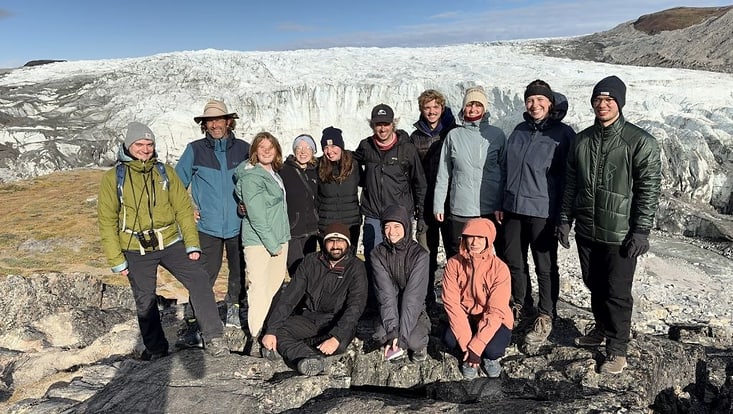
Photo: Thyge Bruun
Field course group at the Russel Glacier near Kangerlussuaq.
On Tuesday, 15 September, the return of the final participants marked the end of this year’s “Soil Science Field Course Greenland” of University of Hamburg. Twelve Master’s students from the Geosciences and Integrated Climate System Sciences programmes of the Department of Earth System Sciences spent around two weeks in West Greenland together with their instructors Dr. Claudia Fiencke, Dr. Evan Wilcox, Prof. Dr. Lars Kutzbach and the doctoral researcher Hyeju Lee. This special research-oriented field course is supported through the MOMENTplus project by the German Federal Ministry of Research, Technology and Space.
The field course focused on student group projects investigating permafrost-affected soils, hydrology and greenhouse gas fluxes in the Arctic tundra of Disko Island (Greenlandic: Qeqertarsuaq) in West Greenland. The Arctic Station of the University of Copenhagen served as the group’s base. The students conducted field measurements and collected samples directly in the field, analysed soil properties in the station’s laboratory, and will now continue evaluating the valuable data they collected. The course was not only about scientific methods and subject-specific knowledge: the students also learned how to plan, organise and safely conduct field research under Arctic conditions.
A special component of the course was an introduction to methods used in circumpolar permafrost monitoring. At a permafrost monitoring site near Ilulissat operated by the Alfred Wegener Institute, the students measured active-layer thickness and ground subsidence due to thawing permafrost. In doing so, they made their own contribution to ongoing research while gaining practical experience of long-term monitoring programmes documenting changes in permafrost landscapes under climate change.
Alongside the scientific work, the field course also provided an opportunity to experience some of Greenland’s many spectacular landscapes at first hand. Joint excursions took the group, among other places, to the wildlife-rich tundra near Kangerlussuaq, the margin of the Greenland Ice Sheet, and the impressive icebergs of the Ilulissat Icefjord.
Logistics also became part of the field course experience: weather- and technical problems caused cancellations of domestic flights and ferry services, resulting in delays of several days both on the outward and return journeys. The students thus gained a very direct insight into one of the key challenges of Arctic field research: under expedition conditions, good planning needs to be complemented by flexibility and the ability to respond quickly to changing circumstances.
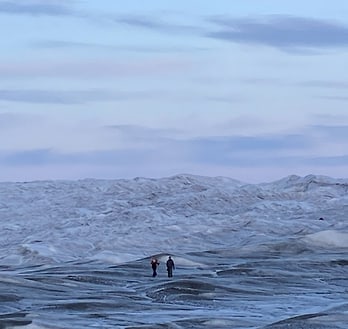
Students at the Greenland Inland Ice Sheet near Kangerlussuaq.
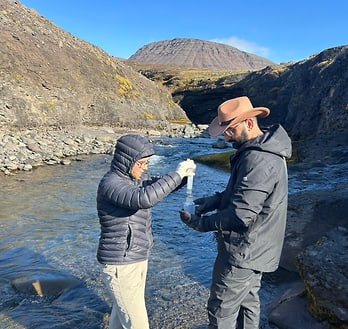
Taking water samples in the Red River at Qeqertarsuaq (Disko Island).
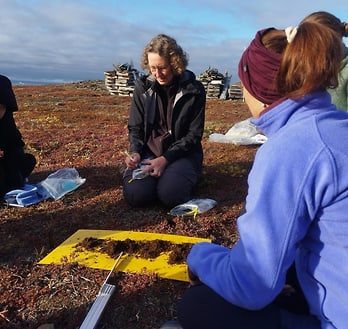
Learning to describe and sample soil horizons in Kuup Ilua valley (Blæsedalen).
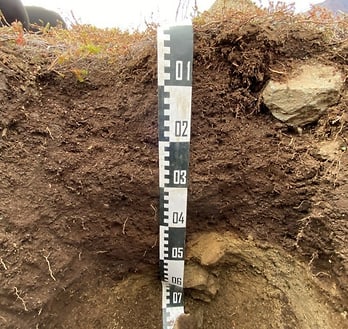
Profile of a permafrost-affected soil (Mollic Turbic Cryosol) in the Kuup Ilua valley (Blaesedalen).
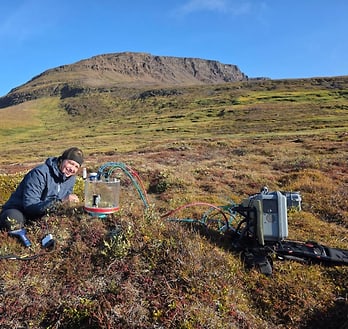
Measuring land-atmosphere fluxes of CO2, CH4 and N2O with the closed chamber method in the Kuup Ilua valley (Blæsedalen).
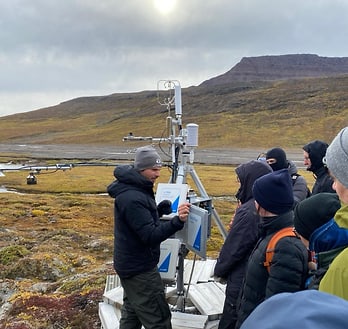
Evan Wilcox explains the eddy covariance flux station in the Kuup Ilua valley (Blæsedalen).
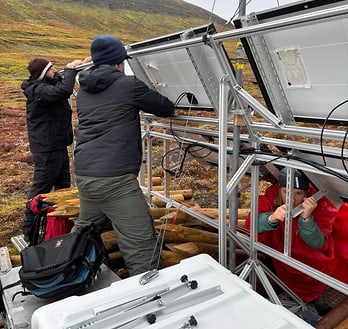
Helping to maintain the eddy covariance flux system in the Kuup Ilua valley (Blæsedalen).
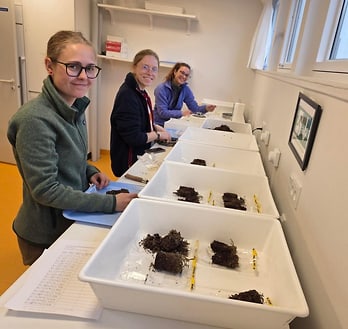
Processing soil samples in the laboratory of Arctic Station.
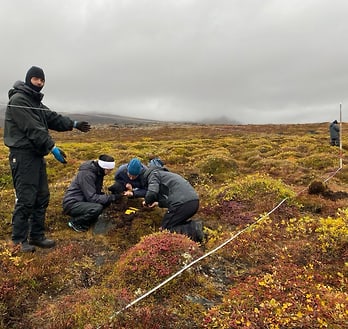
Investigating environmental controls on greenhouse gas fluxes in hummocky tundra in the Kuup Ilua valley (Blæsedalen).
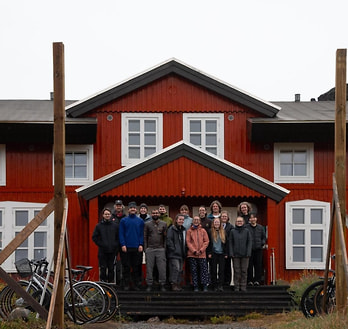
Field course group on departure day of first subgroup.
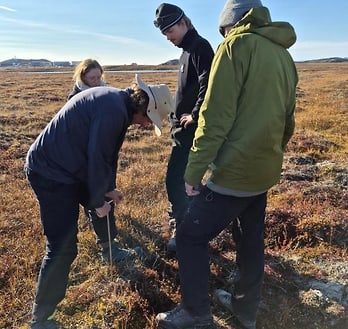
Learning how to conduct thaw depth measurements at the Circumarctic Active Layer Monitoring (CALM) site of the Alfred Wegener Institute near Ilulissat.
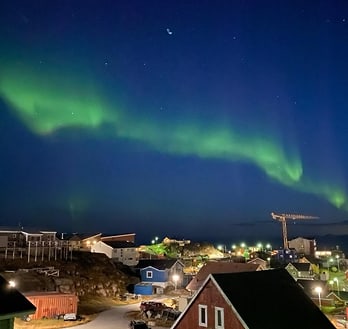
Northern lights in Ilulissat.
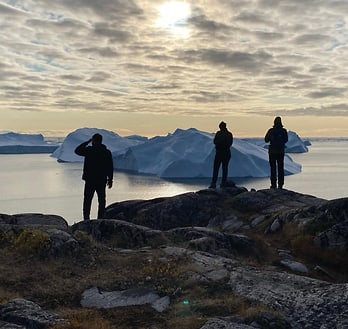
At the Ice Fjord near Ilulissat watching out for whales.
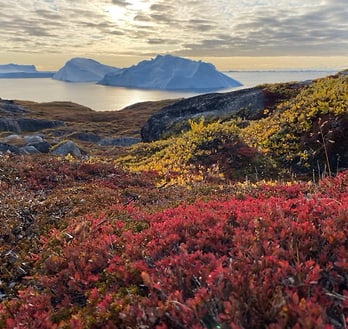
Autumn tundra colours.